
Butyl Rubber Sample Request & Evaluation Process Guide

A procurement guide to running a clean butyl rubber sample request and evaluation. Covers the information to specify upfront (application, substrate, temperature, standards), the evaluation checklist, first-article verification, the path from sample to production approval, and realistic lead times for new-supplier qualification.
What to Specify When Requesting a Butyl Rubber Sample
The quality of a butyl rubber sample evaluation is decided before the sample ever ships — at the moment you write the request. A vague request ("please send a butyl tape sample") forces the supplier to guess your application and almost guarantees a mismatched sample, a wasted evaluation cycle, and weeks of lost time. A well-specified request lets the supplier select the right grade, thickness, and width on the first attempt. For a procurement engineer qualifying a new butyl supplier, the request is the single highest-leverage document in the process.

Before contacting a supplier such as Garmy, assemble the following information. The more of it you provide, the faster and more accurate the sample selection will be.
- Application and joint type — Where the material goes (e.g., automotive headlamp seal, window perimeter, EV battery pack, metal roofing seam) and whether it is a compression seal, bond, or gap-fill
- Substrate(s) — Both mating surfaces: aluminum, painted steel, glass, polycarbonate, PVC, concrete. Adhesion behavior changes dramatically by substrate
- Operating temperature range — Continuous and peak. Garmy butyl tape operates from -40°C to +110/120°C, but your specific range guides grade selection
- Geometry — Required width, thickness (1mm / 2mm / 3mm standard, custom available), and whether you need roll, sheet, or die-cut form
- Standards and compliance — Any applicable standard (ASTM, JIS, EN, AAMA) and regulatory needs (RoHS, REACH, IMDS for automotive)
- Volume forecast — Expected annual usage. This determines whether the program justifies a custom formulation or a standard grade
For a starting point, Garmy's two primary tape grades cover most use cases: SD-1 (premium, 42.82 N/cm peel) for demanding sealing, and S-3 (standard, 36.86 N/cm peel) for general-purpose work. For raw material programs, the butyl compound line (HY-1, HY-2, CN-1, CN-FR) supports custom formulation. Naming the grade you want — or describing the performance you need so the supplier can name it — turns a guessing game into an engineering conversation.
Garmy supplies butyl tape samples in SD-1 and S-3 grades across standard widths and thicknesses — review the specifications before submitting your request.
Related Product
Butyl Tape — SD-1 / S-3 Sample Grades
Widths 15–300 mm, thickness 1–3 mm, samples available for evaluation
The Evaluation Checklist: What to Test and How to Compare
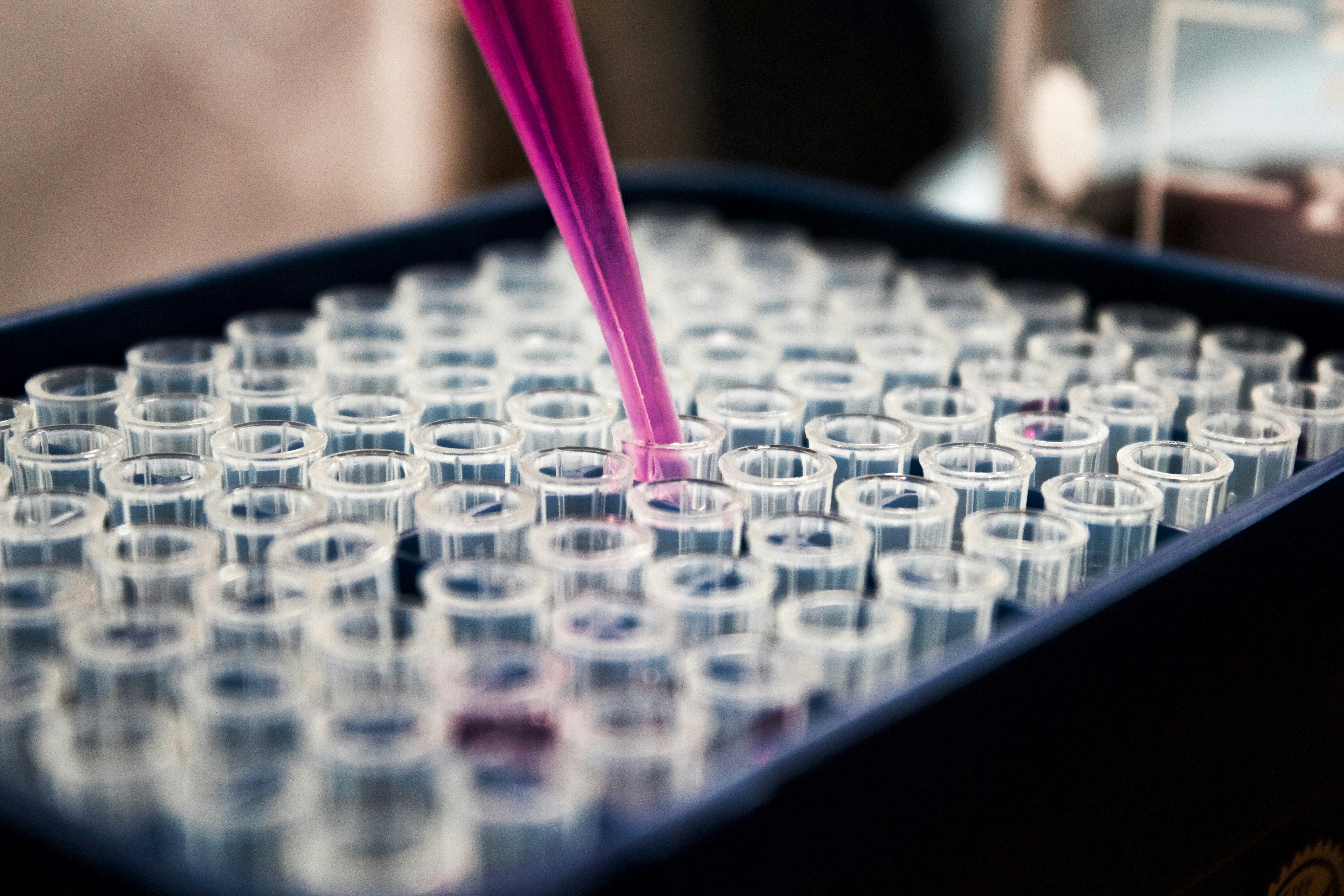
Once the sample arrives, a disciplined evaluation protects you from approving a material on first impressions. Butyl rubber feels similar across suppliers to the hand, but performance differences emerge under controlled testing. Run the sample against the conditions the part will actually see in service — not just lab-ideal flat coupons. Document each result so the evaluation is repeatable and defensible if a downstream auditor asks how the supplier was qualified.
- Initial inspection — Confirm grade, width, thickness, color, and that the supplier's CoA (Certificate of Analysis) matches the physical sample
- Adhesion / peel test — Measure peel strength on your actual substrate, not the supplier's test panel. Compare to the spec value (SD-1: 42.82 N/cm, S-3: 36.86 N/cm) and to your incumbent material
- Compression and conformity — Apply the realistic clamp load and verify the tape fills the gap without squeeze-out or dry spots
- Thermal cycling — Cycle between your low and high service temperatures and re-check adhesion and sealing. This exposes creep and bond degradation
- Environmental aging — UV, humidity, or salt-spray exposure as relevant to the application, followed by re-test
- Process fit — Verify the sample integrates with your line: liner peel behavior, tack at line temperature, die-cut handling
A common evaluation mistake is testing a single coupon and treating one good result as proof. Always test multiple specimens to capture variability, and where possible test the sample lot against a second lot to gauge batch-to-batch consistency — the property that separates a one-off good sample from a reliable production supplier. Garmy's IATF 16949 system is built around exactly this consistency, with lot-level CoA so each shipment maps to a verifiable record.
From Sample to Production: First-Article, Approval, and Lead Times
A successful sample evaluation is the start, not the end. Moving from "the sample passed" to "this supplier is approved for production" runs through a structured sequence — most rigorous in automotive, lighter in construction, but conceptually the same everywhere. Mapping this path upfront, with realistic lead times, prevents the classic procurement surprise of a validated sample that still cannot ship for months because the approval steps were not scheduled.

| Stage | Purpose | Typical Lead Time | Output |
|---|---|---|---|
| Sample request | Match grade to application | 1–2 weeks | Physical sample + CoA |
| In-house evaluation | Bench + environmental testing | 2–4 weeks | Evaluation report |
| First-article (FAI) | Verify production-representative part | 2–3 weeks | FAI report / dimensional |
| PPAP (automotive) | Full production approval package | 3–6 weeks | PPAP submission, PSW |
| Custom formulation | Tooling / formulation adjustment | 2–3 weeks added | Trial batch |
| Production release | First mass-production order | Per order MOQ | Released supplier |
- First-article inspection (FAI) — The supplier produces a part from production-representative tooling and process, and you verify it matches the approved sample dimensionally and in performance. This catches the gap between a hand-made sample and a line-made part
- PPAP for automotive — Hyundai, Kia, and GM programs require a Production Part Approval Process submission including the Part Submission Warrant (PSW), material data (IMDS), and process documentation. Schedule 3–6 weeks and start it in parallel with evaluation, not after
- Custom thickness or formulation — If your application needs a non-standard spec, add roughly 2–3 weeks for tooling adjustment and a trial batch. Garmy can produce small trial batches for first-article validation
- Plan the calendar backward — From your production start date, subtract every stage above. Begin the sample request early; the most common cause of a late launch is starting supplier qualification too late, not slow suppliers
For raw-material programs needing a tailored formulation, Garmy's butyl compound line supports custom development with trial batches for first-article validation.
Related Product
Butyl Compound — Custom Formulation Development
HY-1 / HY-2 / CN-1 / CN-FR grades, trial batches for first-article validation
FAQ: Butyl Rubber Sample & Evaluation
Q: Are butyl tape samples free, and is there a minimum to request?
A: Standard evaluation samples (a roll segment or a few die-cut pieces of an existing grade such as SD-1 or S-3) are typically provided free for qualified B2B inquiries. Custom-formulation trial batches involve tooling and material cost and are handled case by case. Specify your application clearly so the right sample type is sent the first time.
Q: How long does the full sample-to-approval cycle take?
A: For a standard grade, plan roughly 1–2 weeks for the sample, 2–4 weeks for in-house evaluation, and 2–3 weeks for first-article verification — about 5–9 weeks total. Automotive PPAP adds 3–6 weeks, and a custom formulation adds 2–3 weeks. Start early and run approval steps in parallel where the standard allows.
Q: Should I test on the supplier's panel or my own substrate?
A: Always test on your own substrate under your actual joint conditions. Peel and adhesion values are interface properties — they change with surface finish, coating, and cleanliness. The supplier's spec value (e.g., SD-1 at 42.82 N/cm) is a reference measured on a standardized panel; your real-world result is what determines fitness for your part.
Q: What does first-article inspection add beyond the initial sample test?
A: The initial sample may be made under near-ideal conditions. First-article inspection verifies a part produced from production-representative tooling and process, confirming the supplier can reproduce the sample's performance at scale. It is the bridge between "the sample works" and "production parts will work." For automotive, FAI feeds into the broader PPAP package.
Q: Can Garmy match an existing tape we currently buy from another supplier?
A: In most cases, yes. Provide the incumbent material's spec sheet, application details, and ideally a physical reference sample. Garmy can match performance with an existing grade or develop a custom formulation, then validate through first-article testing against your reference. Garmy is an approved supplier to Hyundai, Kia, and GM, so cross-qualification is a familiar process.
Ready to request a butyl rubber sample and start your evaluation?
Get in Touch
Sample Request · Custom Quote · Technical Inquiry
25+ years of butyl rubber expertise and an IATF 16949 quality system to deliver the right sample and guide you through qualification.
Request a Quote →
